

ISO INTRODUCTION
The standards published by ISO undergo changes periodically, to reflect the best-suited practices over the changing times. ISO series of standards For a business unit to successfully set up and Certification Bodies and Rating Agency Accreditation or get maximum benefits from an established management system, auditors within the organization have to be trained to assess the system against Certification Bodies and Rating Agency Accreditation. They must also be able to assess their suppliers required management system to support own Quality Initiative.
To increase professionalism, quality auditors also seek formal registration with the IAF-AB (UK) one of the prerequisites for such registration requires the quality auditors and practitioners to successfully complete an IAF-AB (UK) approved auditor training.
OBJECTIVE OF THE COURSE:
The objective of the course is to illustrate the importance of the 5 Days Lead Auditor Training Programe role, skills and competency in bearing the ultimate responsibility for the effective performance of the audit team. A practical and intensive course for training quality professionals to External, Internal and manage third and second party audits of a Certification Bodies and Rating Agency Accreditation Course describes how to plan and perform an audit, report findings, conduct opening and closing meetings and establish follow-up action. You will understand by the end of the course how regular auditing by an audit team directed by a competent internal auditor is the foundation of an effective Certification Bodies and Rating Agency Accreditation On completion of the course you will have the necessary skills and the experience to Internal Audit and manage your own audits. The learning process will include a Series of tutorials, exercises, culminating in both practical and written examination. Delegates will be supplied with a bound set of comprehensive course notes.
COURSE CONTENTS:
- Introduction to Certification Bodies and Rating Agency Accreditation Vocabulary & understanding definitions
- Introduction to Certification Bodies and Rating Agency Accreditation
- Need for Internal Quality Audits
- Auditing Techniques
- Conducting Internal Quality Audits
- Course Examination with minimum 70% passing marks.
Day 1: Introduction to Accreditation and Standards
Session 1: Overview of Accreditation
- Definition and importance of accreditation
- Role of certification bodies and rating agencies in various sectors
- Key stakeholders in the accreditation process
Session 2: Understanding Relevant Standards
- Introduction to ISO/IEC 17021 and ISO/IEC 17065
- Overview of other applicable standards (e.g., ISO 9001, ISO 14001)
- Key definitions and terminology
Session 3: Principles of Auditing
- Understanding the audit process and its objectives
- Types of audits: internal, external, and accreditation audits
- Role and responsibilities of the lead auditor
Day 2: Planning and Preparing for Audits
Session 4: Audit Planning
- Developing an audit plan: objectives, scope, and criteria
- Identifying resources and establishing an audit team
- Conducting a preliminary risk assessment
Session 5: Audit Preparation
- Gathering documentation and relevant information
- Pre-audit meetings and stakeholder communication
- Setting up audit checklists and tools
Session 6: Conducting Document Reviews
- Understanding documentation requirements for certification bodies
- Techniques for effective document review
- Identifying compliance gaps through documentation analysis
Day 3: Conducting Audits
Session 7: Opening Meeting and Audit Execution
- Conducting the opening meeting: objectives and expectations
- Techniques for effective interviews and observations during audits
- Collecting and verifying audit evidence
Session 8: Assessing Compliance
- Evaluating compliance with accreditation standards
- Using objective evidence to support findings
- Identifying strengths and weaknesses in the organization’s practices
Session 9: Audit Team Management
- Leadership skills for lead auditors
- Fostering collaboration and teamwork within the audit team
- Addressing challenges and conflicts during audits
Day 4: Reporting and Follow-Up
Session 10: Audit Reporting
- Structure and content of audit reports
- Communicating findings and recommendations effectively
- Techniques for writing clear and concise audit reports
Session 11: Closing Meetings
- Preparing for and conducting the closing meeting
- Presenting findings and obtaining feedback from auditees
- Discussing next steps and action plans
Session 12: Follow-Up and Continuous Improvement
- Importance of follow-up actions post-audit
- Monitoring implementation of corrective actions
- Strategies for fostering a culture of continuous improvement
Day 5: Practical Application and Case Studies
Session 13: Case Studies in Certification and Rating Agencies
- Reviewing real-world case studies of audits
- Lessons learned and best practices
- Group discussions and analysis of case scenarios
Session 14: Mock Audit Exercise
- Conducting a mock audit in small groups
- Role-playing as lead auditor, team members, and auditees
- Feedback and debriefing session
Session 15: Final Assessment and Course Conclusion
- End-of-course assessment (written or practical evaluation)
- Review of key concepts and learning outcomes
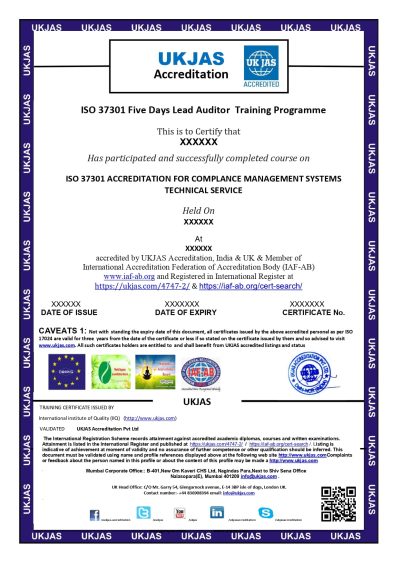
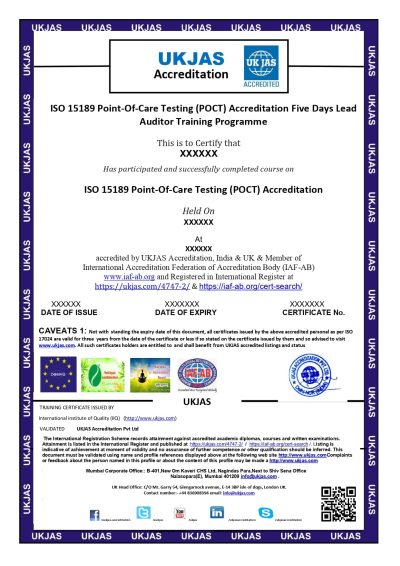
- Issuance of certificates of completion for Certification Bodies and Rating Agency Lead Auditor Training
Who Should Attend
- Quality managers and auditors in certification bodies and rating agencies
- Professionals involved in the accreditation process
- Individuals aspiring to become lead auditors in certification and rating operations
Stakeholders in industries requiring certification and rating services.
For detail of contents refer our website at www.ukjas.com
- WHO SHOULD ATTEND:
1) All employees whose work responsibility directly affects Certification Bodies and Rating Agency Accreditation
2) Those individuals willing to take up external auditing as a future profession by becoming an independent auditor.
3) Those who intend to enroll themselves to IAF-AB (UK) Registration Schemes of Certification Bodies and Rating Agency Accreditation
4) Management Representatives responsible for effective implementation and execution of Certification Bodies and Rating Agency Accreditation.
- FACILITIES:
All facility for delegates covering lecture hall, tea and lunch will be arranged by Client or if you are attending the course at UKJAS Offices. UKJAS institute will arrange the above facility.
- COURSE DETAILS:
Detail program of every days training course will be sent / given on the first day to the delegates on registration.
- DURATION:
Five days Lead Auditor Training program for Certification Bodies and Rating Agency Accreditation [Timings: 10.00 am to 6.00 pm]
FEES:
- 5 Days Lead Auditor Training program of Certification Bodies and Rating Agency Accreditation and any other program is 25000+18%GST Payment should be made by Cheque / DD in favor of “UKJAS Accreditation PvT. Ltd, Mumbai.


Reviews
There are no reviews yet.